
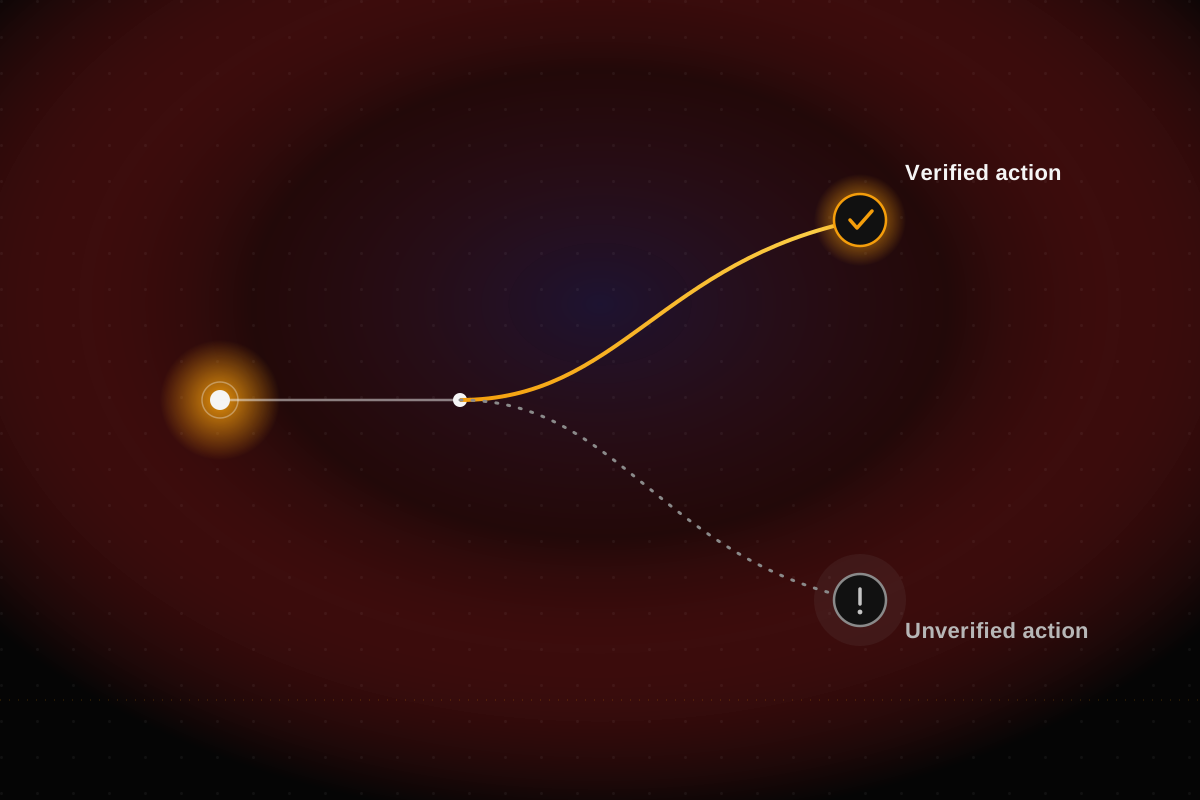
For years, enterprise AI was something organizations used. Today, AI agents can access enterprise data, choose tools, interact with applications, execute workflows and make decisions with limited human intervention.
Bottom Line
- AI agents now access data, choose tools and take action with limited human oversight. A compromised credential used to be the worst case. Now it's an agent manipulated into doing something nobody intended.
- The old question, “Is our AI secure?”, assumed AI could only answer. That assumption can't carry the strategy anymore.
- The real question is whether you can trust AI to act on your behalf and whether you'd notice the moment it stepped outside its boundaries.
The old question was wrong
For years the question was simple: “Is our AI secure?” AI predicted, classified, recommended, generated and security meant protecting the infrastructure behind it.
That's changing fast. AI agents can access enterprise data, choose tools, interact with applications and execute workflows with limited human intervention. AI isn't just answering anymore. It's acting. A compromised credential is only one part of the risk now an agent can be manipulated through instructions, influenced by untrusted data, handed excessive authority, or triggered into actions nobody intended. We call this Decision Integrity Risk and it belongs on the CISO and board agenda, not the AI team's alone.
The perimeter has moved
Security has always followed the same path: network, endpoint, identity, application, data. The autonomous enterprise adds a layer none of those controls were built for decision, then action.
The question is no longer what your AI knows. It's what it can access, what it can decide, what it can do, what it trusts and what happens the moment it operates outside its intended boundaries.
The gap that matters
If your leadership team can't answer those questions with confidence, you're scaling AI faster than you're scaling your ability to trust and control it. That gap, not the model and not the vendor, is where the next material AI incident will come from.
Autonomy without governance creates risk. Intelligence without boundaries creates uncertainty. The question isn't what your AI can do. It's whether you can trust it to do it.